


Going into groupwork
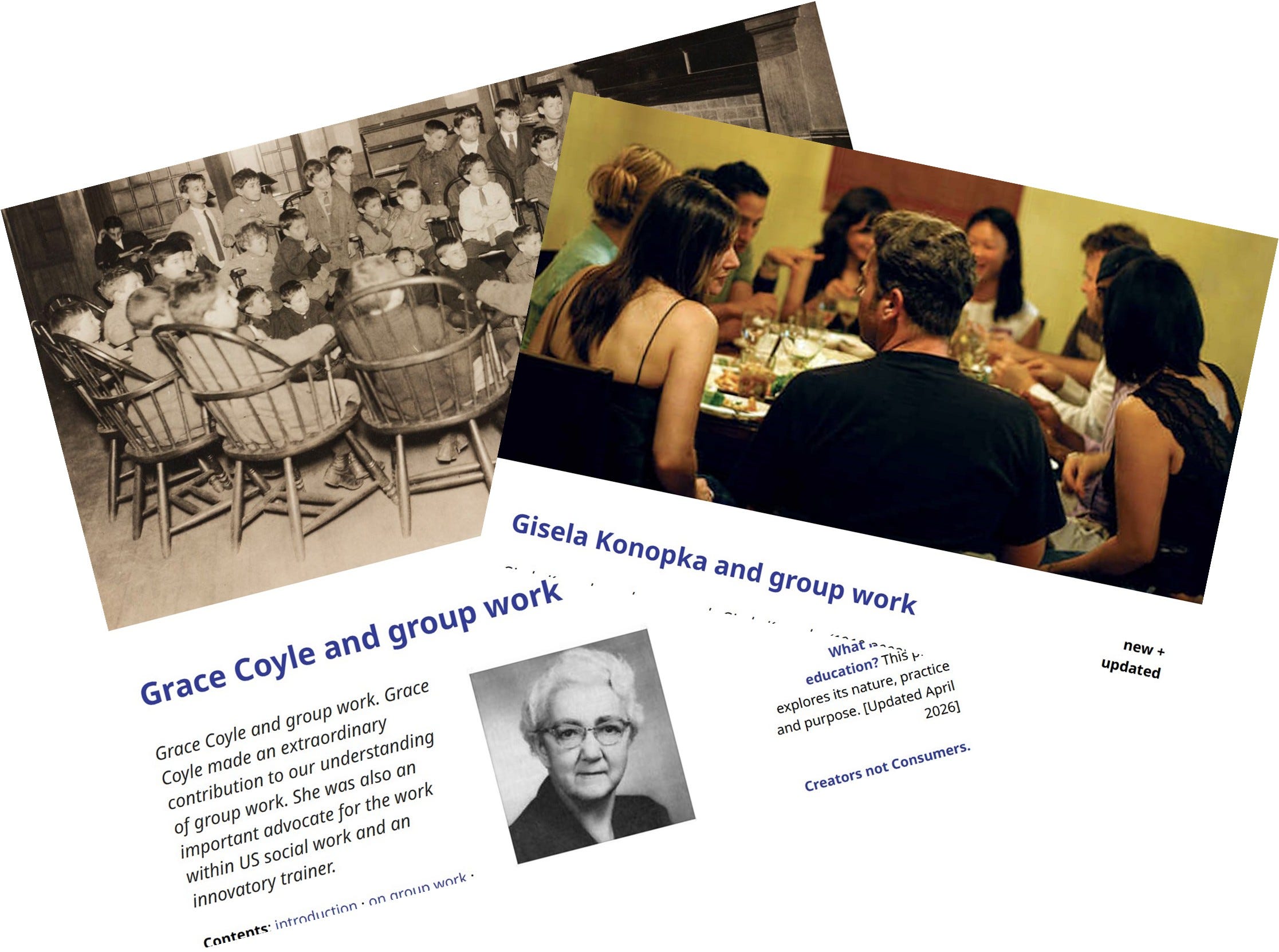
In this post, Social work history in 20 books moves firmly into groupwork. We have previously looked at early theorists, Mary Parker Follett in the USA and Leonard Hobhouse in the UK, who gave importance to the group as part of democracy in politics and democracy in community. This was a response partly to the first world war (1914-18). Many people were recruited into new wartime occupations, and had to negotiate experiences in new groups of comrades, away from home. Examples are groups of fellow soldiers, shared experiences of groups of workers in industry and living separated from family. And many people’s social lives expanded beyond their local community, forcing them to join new groupings of people. In particular, there was migration to new areas. Mutual support became much more obviously necessary to people.
The early literature on community and group theory that we looked at was clear: group experiences led to the development of community, and a sense of shared citizenship. Then in the 1920s and ‘30s, there was a period of economic stress and social change, in which people needed group support to struggle through. As well as families and communities, this came from support by people sharing the same experiences.
An important group was young people; many were migrating to cities from their more rural home experiences of childhood, and urbanisation produced environments that led to offending and troublesome behaviour among young people. We saw, looking at research into social casework in the next generation, that a significant concern was young people’s group behaviour, and ideas about working with gangs in urban centres and other troubled young people, picked up models of informal education, which are similar to the social pedagogy of central and eastern Europe.
