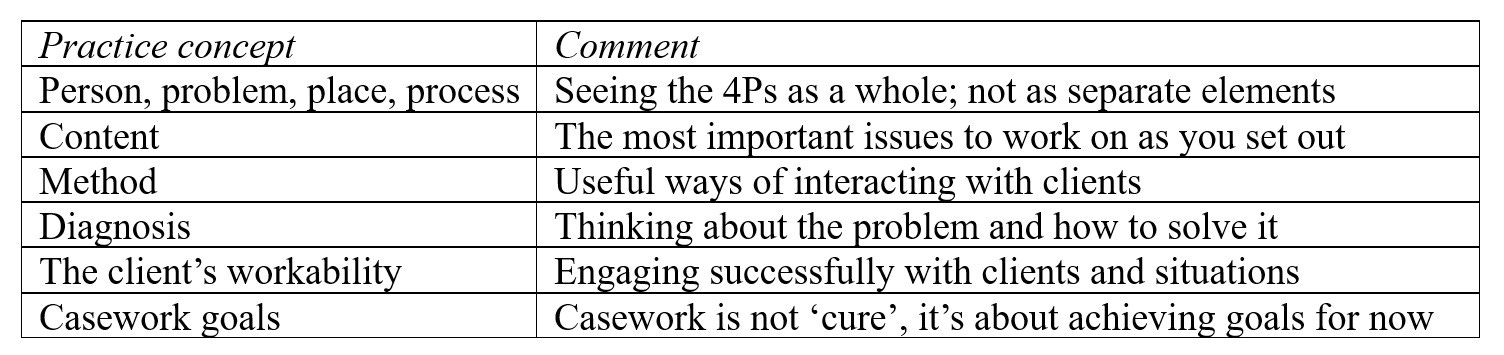
Perlman's casework is about achieving 'here and now' goals, not 'cure'
Social work history in 20 books

A cross-section of problem-solving processes
The second part of Perlman’s (1957) account of social casework as a ‘problem-solving process’ looks at that process in what she calls ‘cross-section’. It’s really about various factors that affect the whole of what the social worker should be doing, rather than the first part’s emphasis on the 4Ps of person, problem, place and process (not forgetting her less-emphasised two extra Ps of the social worker as ‘professional representative’ (of the role and skills of the social work profession) and ‘provisions’ (opportunities discovered and services provided for a client).
Most of the ‘cross-sectional’ discussion refers to the ‘beginning phase’ of practice, on the grounds that since the process will be ongoing throughout the worker’s engagement with clients, getting the human experience of interaction with the worker right at the beginning is the most important factor in being able to carry the whole thing through satisfactorily (p. 105).
What Perlman is offering here is thoughts about important issues in that engagement. From the previous post, you will remember that she has already dealt with the ideas of relationship and problem-solving as part of the ‘casework situation’.
A diagram is not apposite, so I have created a table of the concepts she is working with. In the second column, I have made some brief comment to explain how they become important in the social work process.