


This post begins our account of Perlman’s (1957) classic book treating social casework as a ‘problem-solving process’. The book divides her discussion into two main sections:
A discussion of problem-solving;
An examination of various aspects of casework, mostly in the ‘beginning phase’ of work with clients; I deal with her later account nearly 30 years later (Perlman, 1986) of why she concentrates on the beginning phase, in next week’s post in Social work history in 20 books.
Two lengthy case studies follow: I shall not cover these.
The casework situation
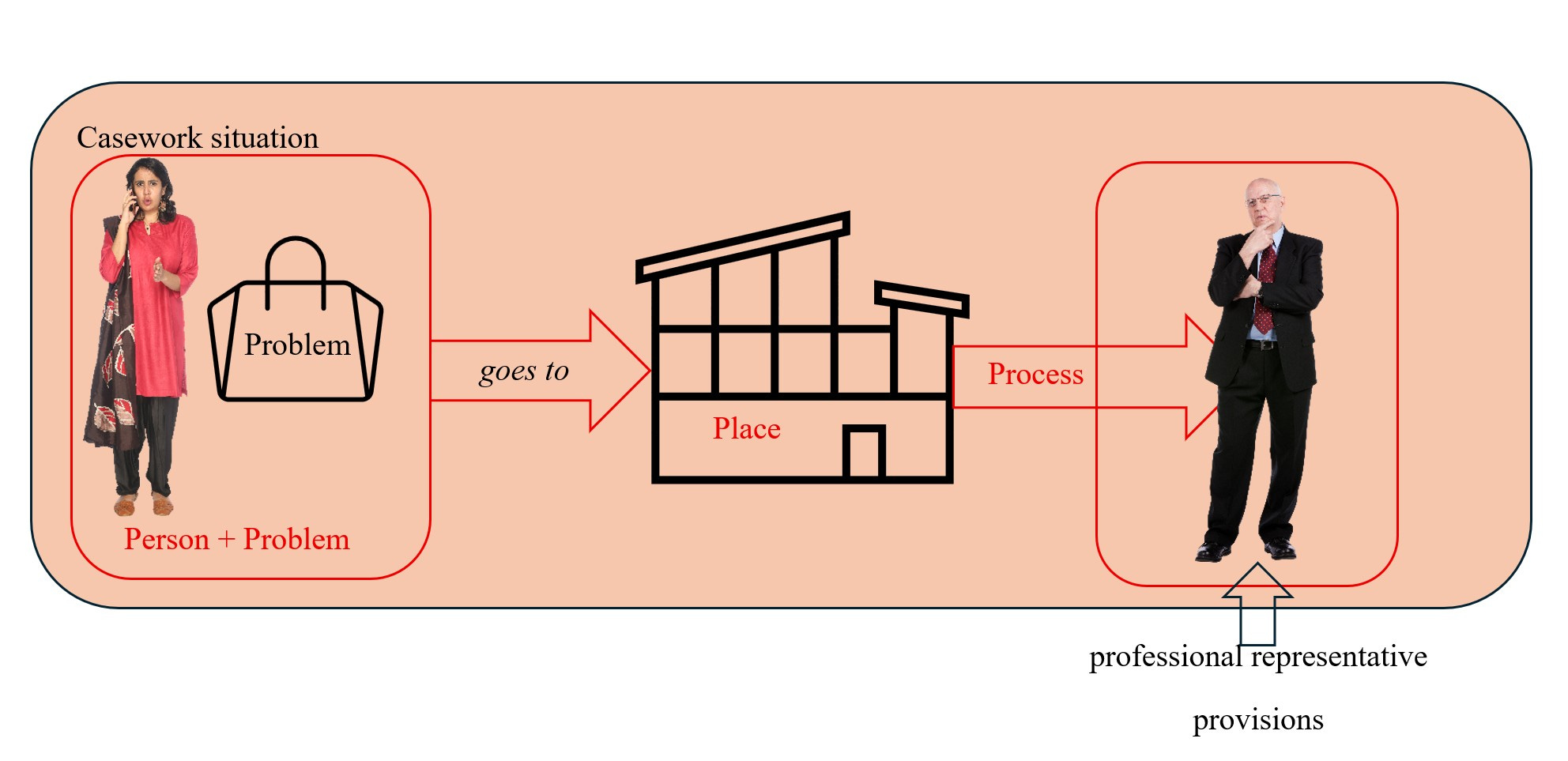
The book starts from the components of the ‘casework situation’, in which ‘welfare agencies’ help individuals ‘cope more effectively with their problems in social functioning (p. 4). There are four elements of this, which she calls ‘the four ‘P’s’. I set these out in the diagram in red, with two later additions added in:
